TL;DR: Your first HIV appointment covers your health history, labs like viral load and CD4 count, and a conversation about treatment, including same-day ART starts in many cases. You'll also meet your case manager. Bring a photo ID; insurance isn't required. Most visits take about an hour.
You've circled the date. You know the address. What you don't know is what's going to happen once you're sitting in that room.
That uncertainty is often the hardest part of a first HIV appointment, harder than any needle or any lab result. Once you know the shape of the visit, most of that worry tends to shrink.
McGregor Clinic built our new patient services around this problem: too many people put off care because the unknown felt bigger than the appointment itself. Here's what happens, from check-in to the moment you walk out.
One quick note before we get into it. This is about the visit that follows a positive HIV test. If you haven't tested yet, our rapid HIV testing takes about fifteen minutes and stays completely confidential, and it's the step that comes before everything below.
Keep this part simple. A first HIV doctor visit doesn't require much from you upfront.
That's genuinely it. If you show up with nothing but yourself, the team can still work with that. Insurance status, or the lack of it, never determines whether you get seen.
Once you're checked in, your HIV care intake begins. A member of the care team will sit down with you and go through your health history. Expect questions about past illnesses, medications, allergies, and family health history. Some questions will feel personal. That's normal, and it's part of how your provider builds a complete picture of your health, not just your HIV status.
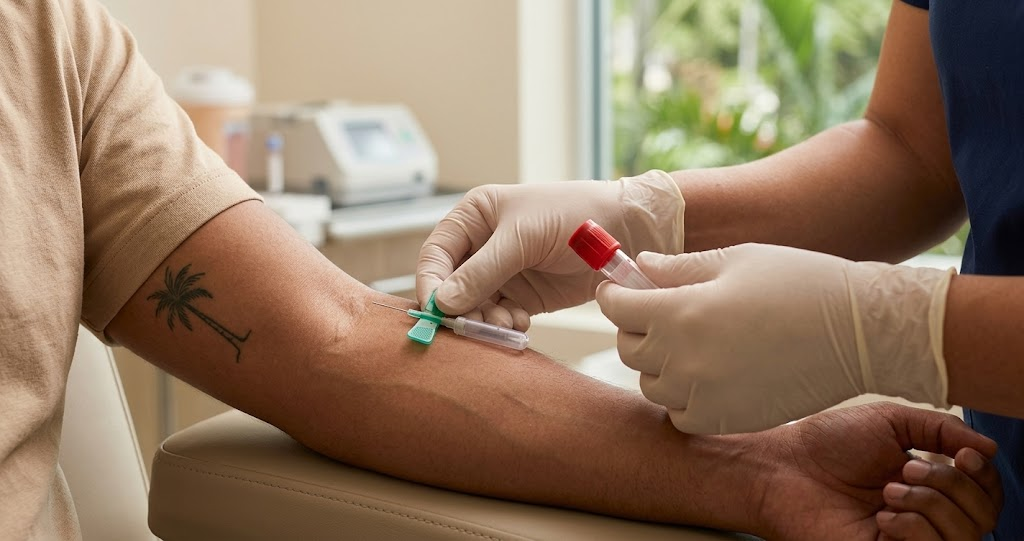
Then come your HIV labs for this first visit. Your provider will likely order a few blood draws to check your viral load (how much HIV is in your blood) and your CD4 count (a measure of how your immune system is holding up). They may also check your general organ function, since some HIV medications interact with kidney or liver health.
None of this happens all at once, and none of it requires you to have answers ready. If you don't know your last CD4 count or when you were diagnosed, that's fine. The team fills in the gaps as you go.
After the labs and history, you'll speak with your provider about treatment. This conversation is where a lot of the fear tends to live, so it helps to know what's on the table.
In some cases, you can start antiretroviral therapy (ART) the same day as this appointment. Same-day ART is a recommended approach across HIV care because starting treatment early lowers the amount of virus in your body faster and helps you stay in care long-term.
Your provider will explain the medication, what to expect, and any interactions you should know about before you decide. If you want to start treatment immediately, ask about our same-day appointment options when you schedule. However, not everyone qualifies for it.
Nobody starts you on medication without your say-so, and there's no penalty for wanting a day, a week, or longer to sit with the decision. Your provider will go over what waiting means for your health and set a plan for when you're ready to revisit it.
Before you leave, you'll meet your case manager. This isn't a separate appointment you have to schedule later. It happens the same day, often right after the medical portion of your visit.
Your case manager is the person who helps with everything outside the exam room:
Think of them as the person making sure the rest of your life doesn't get in the way of your care.
Our case management team stays involved well past this first visit, so this introduction is really the start of an ongoing relationship, not a one-time handoff.
Every part of this visit exists to answer one question: What does your health need right now? Our providers, case managers, and pharmacy team work as a unit, so you're not repeating your story to five different people. You show up once, and the visit does the rest.
No. McGregor Clinic sees patients regardless of insurance status, and our case management team can help you explore coverage options, including ADAP or Ryan White funding, if you're uninsured or underinsured. Insurance never determines whether you get an appointment.
Yes. You're welcome to bring a partner, family member, or friend for support. Let the front desk know when you check in, and they can help arrange space for you both during your visit.
Yes. Your visit, your diagnosis, and everything you discuss with your care team is protected health information. It isn't shared outside your care team without your written permission, aside from the standard public health reporting requirements that apply to all HIV care providers.
You'll typically have a follow-up scheduled within a few weeks to review your lab results and check in on how you're doing, especially if you started treatment. After that, most patients settle into visits every three to six months, though newer patients or anyone adjusting medication may be seen more often.
You don't need to have this figured out before you call. Newly diagnosed or transferring care from another provider, the first visit meets you at whatever point you're starting from.
Disclaimer: We're passionate about sharing helpful insights and information with our community. Please remember, this blog is for educational purposes and should not replace a conversation with your personal healthcare provider. Your health is unique. Always consult a medical professional for any specific concerns or treatment. If you have questions or wish to discuss your care, McGregor Clinic is here to help.