A rapid HIV test appointment usually takes about 20 to 30 minutes, although the actual test only takes a few seconds.
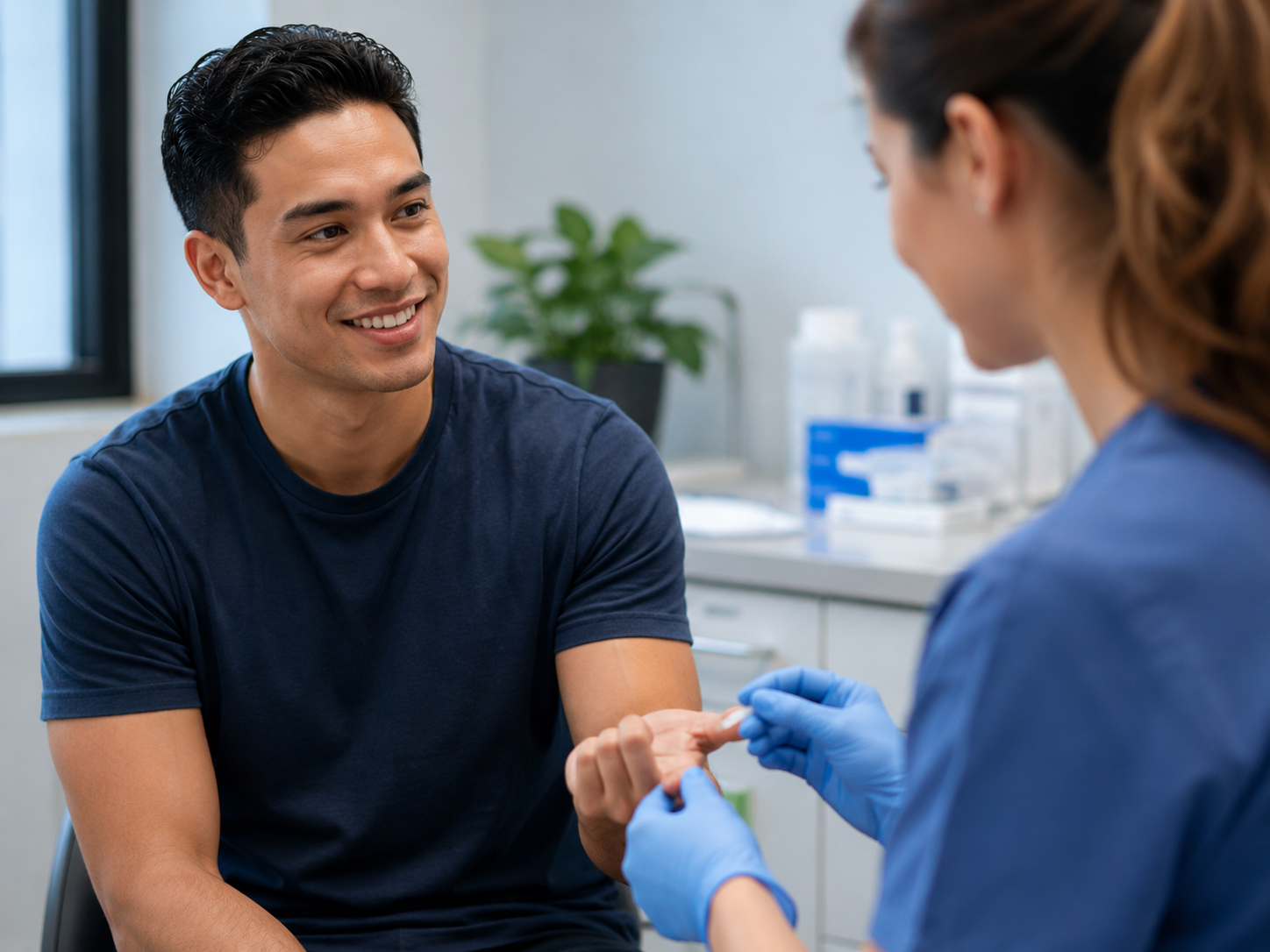
Testing may involve a quick finger prick or an oral swab, and results are often ready within 15 minutes.
A negative result means HIV wasn’t detected at the time of testing, while a reactive result means a follow-up confirmatory test is needed for a final diagnosis.
If your exposure was recent, staff may recommend another test later because HIV tests have a window period before the virus can be reliably detected.
During your visit, the care team at The McGregor Clinic will explain your results, answer your questions, and help you understand your next steps.
We know that the thought of getting tested can stay in the back of your mind for a long time.
You might have searched for a “rapid HIV test near me” late at night, only to close the tab because you felt a bit overwhelmed.
Much of that worry comes from not knowing what happens behind the clinic doors. Will it hurt? How long will it take? Will the staff be kind?
At The McGregor Clinic, our team is here to answer those questions and help you feel comfortable.
When it comes to a rapid HIV test and what to expect, most people find the process much simpler, faster, and more supportive than they imagined.
To help ease some of the uncertainty, this guide will walk you through:
For many of our neighbors in Fort Myers and Cape Coral, the hardest part of the process isn't the test itself. It is the time spent thinking about it.
While the actual sample collection takes only a few seconds, the decision to walk through the door can feel heavy.
We often imagine worst-case scenarios when we lack information. You might picture a cold room or a clinical conversation that feels like an interrogation.
At The McGregor Clinic, we work hard to make sure the reality is the opposite. Our specialized staff understands the nerves, and we’re here to provide a stable, safe space for you.
When you arrive at a site in Fort Myers or elsewhere for rapid HIV testing, the process starts with a simple check-in. You’ll likely fill out a short form with your contact details and some health history.
Your responses help us better understand your needs so we can provide the most supportive and personalized care possible. Your privacy is always respected, and your personal information and test results remain confidential and protected by law.
Before we begin, a member of our team will sit down with you. We’ll explain how the technology works and what the results mean. This is your time to ask anything. We don’t expect you to be an expert; that’s what we’re here for.
Rapid HIV tests work by detecting antibodies to HIV in your blood or oral fluid. The two most common methods are:
Both methods are very accurate. We’ll talk with you about the window period, which is the time it takes for HIV to show up on a test after exposure.
According to CDC testing guidelines, the window for most rapid tests is usually 23 to 90 days. We’ll help you determine whether the timing is right for your situation.
The part of the visit that takes the most time is waiting for the result, but even that is fast. Most people ask, "How long does a rapid HIV test take?" and the answer is usually between 15 and 30 minutes.
While the test is in progress, you can wait in a private, quiet area. If your result is negative, we’ll talk about ways to keep it that way, such as using PrEP (Pre-Exposure Prophylaxis).
If the test is reactive (a preliminary positive), it doesn’t mean you have a final diagnosis. It means we need to do one more lab test to be 100% sure.
If that happens, we stay right by your side to explain what comes next and how modern HIV medical care allows people living with HIV to lead long, full lives.
There’s a common assumption that HIV testing is only relevant for certain groups. This belief keeps many people from getting tested.
The truth is simpler: anyone who has ever been sexually active or shared needles has some level of exposure history. HIV doesn’t follow demographic rules. It follows biology.
The CDC recommends that everyone aged 13 to 64 get tested at least once as part of routine healthcare.
People with higher exposure risk, such as those with multiple partners, those who use injection drugs, or those who have sex without consistent condom use, may benefit from more frequent testing.
Routine testing normalizes the process. It also catches infections early, when treatment is most effective.
If you’ve been putting off testing because you don’t think it applies to you, consider this: knowing your status is a form of self-care. It’s information that helps you make informed decisions about your future.
A rapid HIV test gives you information. What you do with that information depends on the support around you.
At The McGregor Clinic, rapid HIV testing is part of a broader care model. The clinic provides prevention education, PrEP enrollment, nPEP access, and HIV medical care under one roof.
If you need follow-up support, whether for prevention or treatment, you don’t have to start over somewhere else.
The staff includes trained counselors and healthcare providers who specialize in HIV. They understand the emotional side of testing, not just the medical side. And they treat every person who walks through the door with the same respect, regardless of their result.
If you’re searching for "rapid HIV testing Fort Myers" or "free rapid HIV test" and want a place that feels safe, The McGregor Clinic is designed for that purpose.
Schedule an appointment or visit us at 3487 Broadway, Suite 100. Fort Myers, FL as a walk-in. Our team is here and ready to support you when you are.
Yes. Strict privacy laws protect your HIV test results. We do not share your information with your employer or your family. We focus entirely on your personal health and safety.
We want you to feel as comfortable as possible. If having a trusted friend or partner with you helps you feel brave, you’re welcome to have them join you for the visit.
You don’t need insurance to visit us for a free rapid HIV test. We’re a community resource dedicated to making sure everyone in Southwest Florida has access to high-quality care, regardless of their financial situation.
No. Unlike some blood work you might get at a doctor's office, you don’t need to fast. You can eat and drink normally before you come in.
A rapid test gives you a result in minutes during your appointment. A lab test is often used to confirm a result and involves sending a sample to a specialist, which can take a few days.
Disclaimer: We're passionate about sharing helpful insights and information with our community. Please remember, this blog is for educational purposes and should not replace a conversation with your personal healthcare provider. Your health is unique, so you should always consult a medical professional for any specific concerns or treatment. If you have questions or wish to discuss your care, McGregor Clinic is here to help.